
Rainy Season in the Philippines: Mosquito Control Tips to Reduce Dengue Risk

[ Quezon City, Philippines ]

During the rainy season in the Philippines, heavy rains and high humidity can increase mosquito activity in residential and commercial properties—raising the risk of bites and dengue transmission indoors and around the property.
At PestPro PH Management, professional mosquito monitoring, breeding-site inspection, and preventive treatments helps homes and businesses stay protected during the rainy season.
Why Dengue Risk Increases During Rainy Season?

Dengue is commonly spread by Aedes mosquitoes, which lay eggs in clean, still water found in everyday containers. After repeated rains, water collects in places people often overlook—plant saucers, pails, roof gutters, and small outdoor items. Eggs can stick to container walls and hatch when water returns, so mosquito numbers can rise quickly after only a few days of rain, as stated in World Health Organization (WHO) guidance.
What To Do At Home To Reduce Mosquitoes

The best way to control mosquitoes is to remove breeding spots regularly. A one time cleanup helps, but doing it every week makes the biggest difference.
Start outdoors by checking containers that collect rainwater. Emptying is important, but scrubbing container sides matters because eggs can remain above the waterline. Next, check roof and drainage areas. Clogged gutters and downspouts can hold standing water for days, creating a steady breeding source. For Indoors, keep floor drains and rarely used bathrooms clean and flushed to prevent stagnant water. Guidance from the Centers for Disease Control and Prevention (CDC), says removing standing water is one of the most effective ways to reduce mosquitoes.
Avoid Mosquito Bites While Cleaning
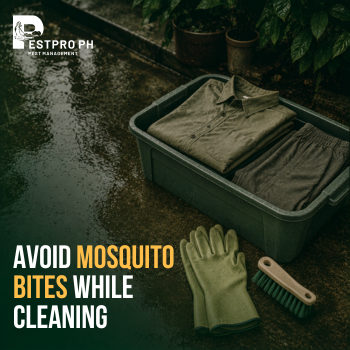
To avoid bites while cleaning, cover up with long sleeves and pants, and apply repellent on exposed skin, as advised in Centers for Disease Control and Prevention (CDC) mosquito-bite prevention guidance. Cleaning midday can help reduces bites because Aedes often bite in the early morning and late afternoon. Focus on shaded, damp areas quickly (like gutters, plant corners, and storage spaces), and avoid lingering near spots with standing water. After cleaning, wash hands and change clothes, especially if you used repellent or handled dirty containers.
When should you call PestPro PH Management?
If mosquito activity stays high even after consistent cleanup, it usually means there are hidden breeding sources or recurring conditions that need a more thorough inspection. Professional help is also recommended when breeding areas are hard to access, such as roof gutters, drainage lines, and concealed water-holding spots.
PestPro PH Management provides structured mosquito control programs designed for rainy-season conditions in the Philippines—combining inspection, targeted treatment, and follow-up to help reduce dengue risk more reliably than DIY efforts alone.


Comments